Does Attendance Actually Make a Difference in the National League South?
Four seasons of National League South data reveal a clear relationship between crowd size and competitive performance, but not a simple formula for success.

Freelance Football Writer · 18 September 2026 · 13 min read

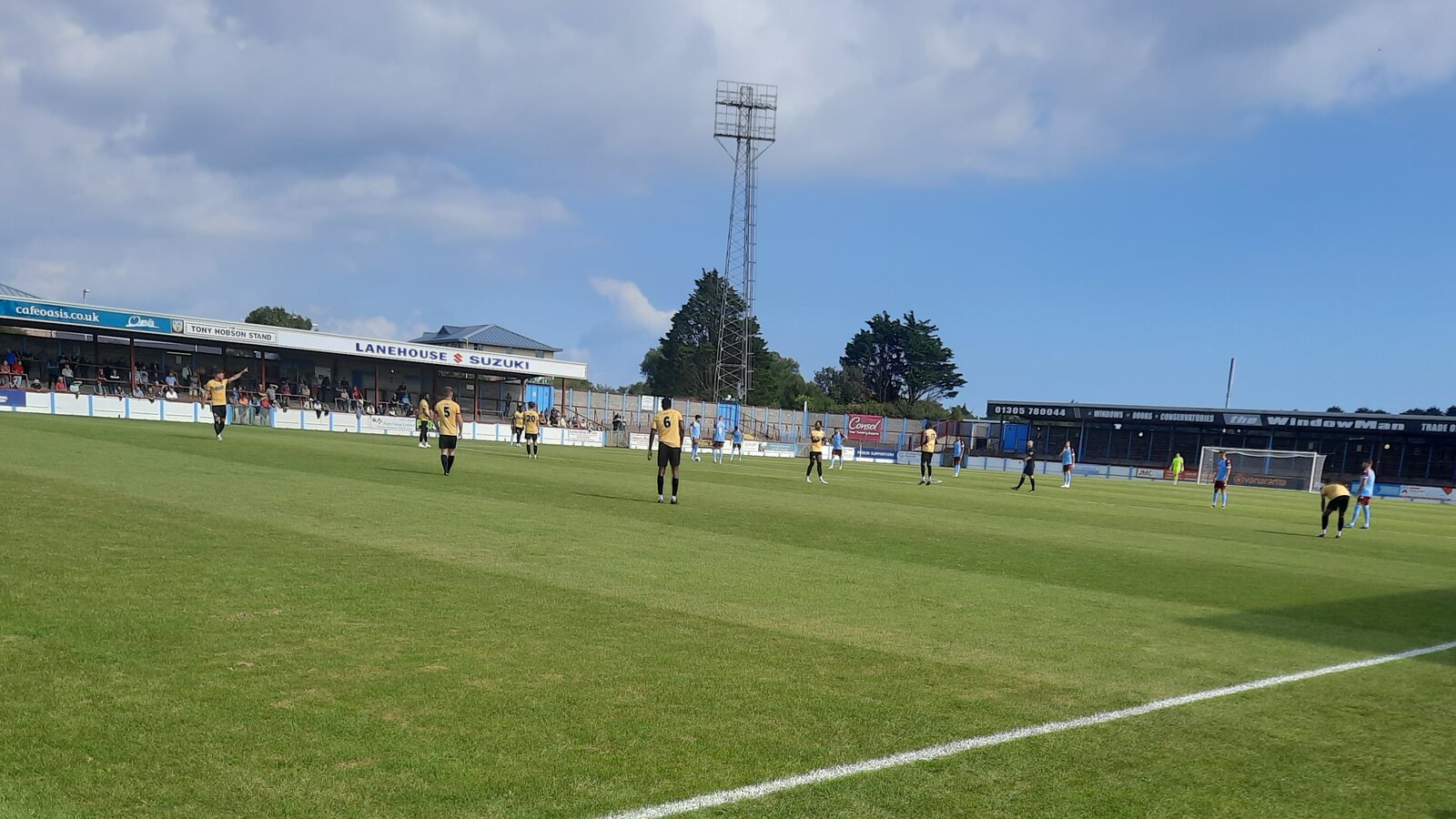
Photo by Mylo Kaye on Pexels
Supporters are the heart and soul of any football club. Every week, they fill the stands, sing the songs, provide clubs with vital revenue and help support clubs’ overall infrastructure season after season.
At higher levels of the game, the financial benefits of having a large, worldwide supporter base are obvious. However, at lower levels of the game, where resources are considerably more limited, a club that consistently attracts a large crowd is often deemed to have an advantage over one playing in front of a much smaller audience.
It’s therefore easy to assume that bigger crowds should translate into success on the pitch. However, there is an obvious problem with that assumption. Successful clubs will always attract supporters. A team challenging for promotion can generate excitement within its community and see its average attendance rise as the season progresses. A team struggling near the bottom can experience the opposite effect.
That makes it hard to truly establish which way the relationship works. Does a large attendance help a club become successful, or does success help a club attract a bigger fanbase? The question, therefore, is whether attendances actually make a difference.
To investigate this at non-league level, four complete seasons of National League South football, from 2022/23 through 2025/26, have been examined. By comparing the attendances and final league positions of clubs across those seasons, as well as their records of promotion, play-off qualification and relegation, it is possible to see whether there is a consistent relationship between the number of supporters in the stands and performance on the pitch.
The numbers do not tell the whole story, but they can provide an indication of whether the assumption that bigger crowds are associated with greater success stands up when it is tested against the evidence.
Methodology
This analysis covers the four complete National League South seasons from 2022/23 to 2025/26, giving a total of 96 club-seasons, with 24 clubs included in each season.
For each club-season, five pieces of information were recorded: average home attendance, final league position, whether the club was promoted, whether it reached the play-offs and whether it was relegated.
Only the 23 regular league season home games were used when calculating average attendance. Cup games and play-off ties are not included in the total. All average attendance data was gathered using data from Transfermarkt.
For the purpose of the analysis, finishing first is recorded as promotion but not as reaching the play-offs. Clubs finishing second to seventh are recorded as play-off clubs, with the play-off winner recorded in both the play-off and promoted categories. Positions 21st to 24th are recorded as the relegation spots.
One outlier worth noting is Truro City’s 2023/24 season. They are the only club-season in the dataset not to play at their home ground, as they shared with Plymouth Parkway, Taunton Town and Gloucester City throughout the season. Thus, their average attendance of 239, alongside their finishing position of 16th, should be interpreted accordingly, as it is not a true reflection of their regular home attendances.
The purpose of the analysis is not to isolate attendance as a single cause of success. Instead, it is to examine whether a consistent relationship exists between crowd size and competitive performance across four seasons of National League South football, and to consider what that relationship can tell us.
There Is a Relationship
Across the 96 club-seasons in this sample, there is a relationship between attendance and league performance. That does not, by itself, demonstrate that larger crowds definitely cause teams to perform better, but the figures do suggest that the two are connected.
The simplest way to measure this is through the correlation between average attendance across 23 games and a club’s final league position. Across the four seasons, the correlation is -0.42. As a ‘lower’ finishing position, high in the table but low numerically, means better performance, the negative figure shows that as attendance increases, league position generally decreases, meaning clubs with bigger crowds tend to finish higher in the table.
A correlation of -0.42 does not by any means reflect a perfect relationship. There are clearly plenty of clubs that do not fit the general pattern, something that will be explored later on. However, it is strong enough to suggest that the relationship is not simply random variation across the division.
The differences become clearer when the clubs are separated according to what they achieved at the end of the season. The eight promoted clubs, four champions and four play-off winners, averaged 1,587 supporters per game, while the remaining 88 clubs averaged 1,112, a difference of 475 supporters per game on average.
When looking at the clubs who made the play-offs, from second to seventh, including the play-off winner and thus promoted clubs, the 24 clubs who finished in that range averaged 1,414 supporters per game, compared to 1,064 across the other 72 clubs. The difference of 350 spectators per match means the average play-off club attracted a third more supporters than the average club outside the play-offs.
At the other end of the table, the 16 relegated clubs averaged 917 fans per game, while the 80 that avoided relegation averaged 1,198, a difference of 281 spectators in favour of clubs who finished outside the bottom four.
Taken together, the figures point towards clubs attracting larger crowds, on average, being more likely to compete towards the top of the National League South, while clubs with smaller attendances were more likely to be found nearer the bottom.
This is the first indication that attendance may be more than simply a by-product of individual results, though the relationship is not strong enough to suggest that crowd size determines the success of a team on the pitch.
The next question is whether that pattern remains visible when the division is split into different levels of attendance.
The Attendance Divide
The relationship becomes clearer to see when the 96 club-seasons are divided into five attendance bands. Instead of just separating the biggest crowds from the smallest, this helps to show whether performance changes as average attendance increases, and a fairly clear pattern begins to emerge.
Clubs averaging fewer than 500 supporters finished, on average, 18.67th. That rises to 14.56th among clubs averaging between 500 and 999, before climbing to 11th for those between 1,000 and 1,499.
The difference becomes even more pronounced among the higher-attendance clubs. Those averaging between 1,500 and 1,999 finished 7.89th on average, while the clubs attracting at least 2,000 supporters finished 7.22nd across the four-season dataset.
The progression is therefore broadly linear, with average league position improving as attendances increase. The gap between an average of less than 500 and over 2,000 supporters is 11.4 positions, or nearly half the division.
The promotion figures are slightly less straightforward, as just 3.7% of clubs in the 1,000-1,499 band were promoted, compared with 4.44% in the 500-999 band. This rises to 16.67% in the smallest attendance band of fewer than 500, before peaking at 22.22% in both of the two highest attendance brackets.
This is a reminder of the limitations of looking at individual outcomes across a relatively small number of club-seasons. There were only six clubs in the fewer than 500 bracket, and just nine in each of the two highest brackets, compared to 45 in the 500-999 range and 27 in the 1,000-1,499 bracket. As a result, a small number of promotions can have a substantial effect on the percentage.
The initial pattern mostly returns when exploring the proportion of clubs reaching the play-offs. Just 16.67% of the clubs averaging fewer than 500 supporters did so, compared with 15.56% in the 500-999 band. This rises to 33.33% among clubs averaging 1,000-1,499, remains at 33.33% for those between 1,500 and 1,999, and reaches 44.44% among clubs averaging more than 2,000.
The relegation figures provide another indication of the divide. 66.67% of clubs averaging fewer than 500 supporters were relegated, compared with 17.78% among those in the 500-999 range and 7.41% among clubs averaging 1,000-1,499. The figure rises slightly to 11.11% in each of the two highest attendance groups.
So although the figures do not form a perfectly linear staircase in every category, the general picture remains consistent. The lowest-attendance clubs were much more heavily concentrated towards the bottom half of the table, while clubs attracting the largest crowds were more commonly competing towards the top.
This is important because the pattern remains visible even when the clubs are separated into different levels of attendance, rather than being driven solely by a handful of unusually large clubs.
But a pattern across 96 club-seasons does not mean every individual club follows it. To understand how far attendance can really correlate with success, it is worth looking at the clubs that sit furthest outside that pattern.
Attendance Doesn't Guarantee Success
The relationship seems clear enough, but it becomes more complex when shifting the focus from groups of clubs to individual seasons. If larger attendances are associated with better performances, there should still be plenty of clubs that fall outside the general pattern, and there are.
Perhaps the best example is Dulwich Hamlet in 2022/23. They averaged 2,464 supporters per game, the fourth-highest total in the entire dataset and the highest average attendance in the league that season, yet finished 21st and were relegated.
Their average attendance was higher than that of every club in the dataset that finished outside the top seven, yet it did not translate into a good league position. This is a clear indicator of the many factors beyond simply the number of fans through the turnstiles, which will be explored later on.
At the other end of the spectrum is Oxford City, in the same season. They averaged just 437 supporters per game, the fourth-lowest total in the dataset, yet finished third and won promotion via the play-offs. They were the lowest-attended club to finish above 15th place, let alone reach the play-offs and subsequently win them.
The contrast between the two is particularly useful because they occurred in the same season. Dulwich averaged an incredible 2,027 more fans per game than Oxford, yet it was the side with 82.3% fewer fans that won promotion.
There are other examples of clubs performing above what their attendance might initially suggest. Boreham Wood averaged 848 supporters in 2024/25 but won the play-offs after finishing fifth. Hemel Hempstead Town had the second-lowest average attendance in 2025/26, with 722, but also finished fifth, while Aveley in 2023/24 averaged just 524 yet made the play-offs in seventh.
The same goes the other way, with bigger attendances producing below-average seasons. Aside from the Dulwich example, Torquay United averaged 2,446 in 2023/24 and finished 18th, just three places above the drop. St Albans City were relegated with the league’s fourth-highest average attendance in 2024/25, despite boasting an average gate of 1,710.
These examples do not change the recurring relationship, but they show that attendance alone cannot reliably predict how an individual club will perform.
The data therefore points to an association across the four seasons rather than a rule that applies to every club. A large crowd does not guarantee success, just as a small crowd does not prevent it.
Why Attendance Is an Imperfect Measure
The figures help to answer the overarching question and provide an indication of the relationship between attendance and performance, but attendance is not a measure that exists in isolation. A club’s average crowd is shaped by various circumstances, many of which have a knock-on effect on performance on the pitch.
One example is the movement of clubs between divisions. A recently relegated club or a side with a predominant history above Step 2, as seen with the likes of Yeovil Town or Torquay United, brings a much larger, established supporter base with it. These clubs are also often better equipped to challenge at the higher end of the division, as a side with plenty of history in the EFL or National League will likely have the resources to challenge at the top of the league, thus maintaining attendances and seeing success on the pitch.
The same principle works in the opposite direction. A smaller club promoted into the National South, seen in examples such as Cheshunt or Aveley, may have a relatively modest established following, even if, competitively, they can compete at Step 2. These clubs experience the opposite effect to the more established clubs mentioned earlier, as a newly promoted club will typically, but not always, compete with fewer resources, meaning a lower-end finish in early seasons, and thus lower attendances, is not uncommon. The attendances can therefore tell us something about the size of its existing support without necessarily telling us how well it will perform.
There is also a high proportion of clubs whose attendances have been built over many years at National South level. An established supporter base can remain relatively consistent regardless of whether a team is challenging for promotion or fighting near the bottom of the table. In those cases, attendance can reflect the club’s place within its community and the footballing pyramid more than anything else.
There’s also a more fundamental issue when establishing which way the relationship works. It’s entirely plausible that a club’s attendance can contribute to its success at any level. Larger crowds can generate more matchday revenue through merchandise, food and drink, ticket sales and so forth. This can increase a club’s commercial appeal, help bring money into the club, and thus improve things such as facilities, playing and staff budgets. A successful, well-run club with good infrastructure can then continue to attract supporters, keeping the cycle going.
A promotion challenge will naturally bring more supporters to home games, as occasional fans become regulars and those who only attend once or twice might come more regularly, especially later in the season. However, the reverse can happen, as a team struggling near the bottom can easily experience the opposite effect.
A struggling team that has won only a handful of games may see a decrease in attendance, therefore a loss of matchday revenue, and a negative version of the cycle mentioned earlier. The relationship can therefore work in both directions at the same time: higher attendance may contribute to better performance, while better performance may contribute to higher attendance. The same is true for poor performance and poor attendance.
The four-season dataset cannot disentangle those two effects. It can show that attendance and performance are associated, but it cannot establish whether one is driving the other, or how much of the relationship is explained by other factors.
This is why attendance is useful as an indicator, but an imperfect measure of a club’s true competitive strength. The numbers show a relationship worth investigating, but they cannot tell us exactly what is happening beneath it.
That brings us back to the original question.
So, Does Attendance Actually Make a Difference?
Across the 96 National League South club-seasons examined, the evidence suggests that it does have a meaningful association with competitive performance. The correlation between average attendance and final league position was -0.42, while the attendance bands showed a clear overall progression towards higher finishing positions as average crowds increased.
The outcome figures pointed in the same general direction, with play-off and promoted clubs attracting larger average crowds than those that did not achieve those outcomes. But the data does not demonstrate that attendance itself determines success.
The individual examples provide an important qualification. Dulwich Hamlet attracted one of the largest average crowds in the entire sample but were relegated, while Oxford City had one of the smallest attendances yet finished third and were promoted. These cases do not invalidate the relationship, but they show that it cannot be applied as a rule to individual clubs.
There are also too many factors sitting behind an attendance figure for it to be treated as a direct measure of competitive strength. A club’s supporter base can reflect its history, size, circumstances and position within the football pyramid, while its own performances can simultaneously influence how many people turn up to watch it.
That makes the answer more complex than simply saying that bigger crowds produce better teams.
The evidence suggests that attendance appears to matter, but it is one part of a much larger picture. Larger crowds are associated with stronger performances across the National League South, but the relationship is neither absolute nor sufficient to explain why one club succeeds while another fails.
Perhaps the most useful conclusion, therefore, is not that attendance guarantees success, but that a club’s position in the attendance table and its position in the league table are unlikely to be completely unrelated.
For the National League South, at least across these four seasons, the numbers suggest that the crowd does matter. They also show why attendance alone cannot explain the fortunes of a football club.
Keep reading